

When marketers want to improve conversion rates, they do not start with guesses. They study what is already working. Landing pages are no exception. Real-world examples reveal patterns in messaging, layout, and user flow that influence whether visitors convert or drop off .
In 2026, landing page design is all about walking the fine line between form and user experience. Users are increasingly demanding friction-less landing page experiences that are personalized to their needs. Bulky, cluttered landing page design is out of the picture. Clean, conversion-friendly, user-first design is the need of the hour .
This comprehensive guide will walk you through everything you need to know about creating landing pages that don’t just look good—they perform.
What Is a Landing Page?
A landing page is a dedicated web page designed to guide visitors toward a single action—such as filling out a form, signing up for a newsletter, downloading a whitepaper, or making a purchase. Unlike other pages on your site that encourage exploration, a landing page should serve as a focused gateway, not an intersection. Its purpose is to lead users down a one-way street with minimal distractions, removing exit ramps and alternative routes .
When designed well, a landing page aligns with a specific campaign or message and provides a frictionless path to conversion.
Why Landing Page Optimization Matters
Most B2B marketing teams obsess over traffic growth—more clicks, more impressions, bigger reach. But here’s the reality: if your landing page doesn’t convert, all that traffic is wasted .
A dangerously low bar is set by “average” conversion rates, but the gap between average and elite is a chasm. The top 10% of landing pages convert at 11.45% or higher, while the median rate is a mere 4.6% . Data from Unbounce shows that the average landing page conversion rate across industries is just 4.02%, meaning most businesses fail to turn 96% of their traffic into leads or sales. But top-performing landing pages can achieve conversion rates of 25% or higher through strategic optimization .
This gap represents a massive, untapped revenue opportunity.
Let’s put numbers to it. Imagine a B2B SaaS company running a $50,000 campaign with a $5 CPC (10,000 visitors):
- Average Page (2.5% Conversion): You get 250 MQLs at an effective CPL of $200
- Optimized Page (5% Conversion): You get 500 MQLs at an effective CPL of $100
- Top-Tier Page (10% Conversion): You get 1,000 MQLs at an effective CPL of just $50
By moving from average to optimized, you double your lead volume and halve your Cost-Per-Lead—without spending another dime on ads .
10 Landing Page Design Trends for 2026
1. Content-First Layouts
Clean design that prioritizes the landing page content and strips away unnecessary distractions is crucial for high conversions. These types of landing pages typically feature generous white space, clear visual hierarchy, and a limited color palette—making the content easy to scan and digest. With well-aligned elements and simplified navigation, users can instantly spot what matters most: the headline, value proposition, and call-to-action (CTA) .
2. Mobile-First Design
Designing your landing page with a mobile-first approach is now a mandatory step in your landing page design process. With the majority of users accessing websites from their smartphones, your landing page needs to deliver a smooth, intuitive experience on smaller screens. Plus, Google prioritizes mobile-friendly pages in its search rankings, making mobile optimization crucial for both UX and SEO .
Top mobile design trends for 2026 include larger tap targets to prevent wrong clicks and sticky call-to-action (CTA) buttons that stay fixed at the bottom of the screen for easy access .
3. Performance-Friendly Visuals
In 2026, landing page design is shifting away from animations and auto-play videos toward faster, performance-friendly visual elements that enhance the user experience without slowing things down. Businesses are opting for easy-to-load images, subtle micro-interactions such as hover effects or animated icons, and illustrations instead of resource-heavy video headers .
4. Strategic Color and Contrast
Color psychology remains a key player in landing page design in 2026. Rather than using bold colors that make landing pages pop, brands are leveraging contrast strategically to improve clarity and offer a great user experience. High-contrast CTAs are designed to stand out without clashing with the overall aesthetic of the landing page .
5. Clean, Legible Typography
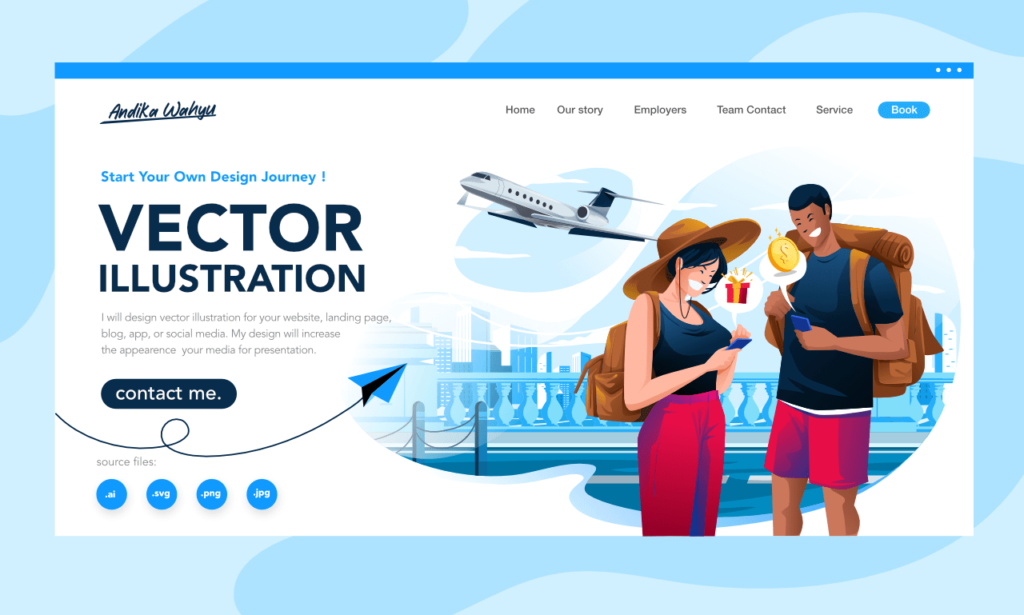
Landing page content can quickly become overwhelming if it’s not easy to scan. Most users don’t read every word. That’s why clear headings, bullet points, short paragraphs, and visual breaks like icons or images are essential. In 2026, designers are focusing on clean, legible type that guides users effortlessly through the content .
6. Personalized Hero Sections
Hero sections are no longer composed of generic stock photos and headlines. Users these days expect to be greeted by hyper-personalized messaging. Dynamic headlines and images based on the source or user type can make your landing pages instantly engaging to users .
7. Authentic Brand Visuals
While stock photos can serve as a quick fix when building landing pages, achieving high conversions requires visuals that feel authentic and trustworthy. Landing page visual design trends in 2026 focus on incorporating product photography, real product screenshots, and videos. These types of visuals enhance credibility by providing users with a clear understanding of exactly what they’re purchasing .
8. Scannable Social Proof
Social proof plays a crucial role in building trust with new customers, but overloading a landing page with it just for the sake of trust can disrupt the user experience. Instead, strategically place testimonials and user reviews in formats like cards or mixed media throughout the page, rather than grouping them all into a single section .
9. Visual CTAs
CTAs have evolved beyond simple buttons. CTA buttons become visual anchors designed to grab attention and drive action. To stand out, a great CTA uses contrasting colors and action-oriented text that make it pop from the rest of the page. Adding visual elements like shape, shadow, and animation to these CTAs further enhances their ability to stand out .
10. Smart, Modular Design
Landing pages are always built to scale, which is why it’s crucial to design them with flexibility and adaptability in mind. This involves creating pre-designed structures that can be easily updated and reused across multiple pages. For example, testimonial sections, feature tables, and pricing structures can be developed once and quickly plugged into any landing page as needed .
7 Landing Page Mistakes That Kill Conversions
1. Too Much Information Required
Asking for excessive details upfront—such as full addresses, phone numbers, or multiple qualifying questions—creates friction that can drive users away. The more fields you include, the more opportunities you give users to reconsider .
The Fix: Simplify your forms. Only ask for what’s absolutely necessary to begin the relationship (usually a name and email). Research shows that reducing form fields from 11 to just 4 can increase conversions by as much as 120% .
2. No Specific Call to Action
Generic or multiple CTAs dilute the user’s focus. Phrases like “Learn More,” “Contact Us,” or “Start Now” may not clearly communicate what the user will get or what will happen next .
The Fix: Keep it to one clear action. Choose a primary goal for the page and build around it. Make the CTA button specific and benefit-oriented using phrases like “Download the Report,” “Get My Free Quote,” or “Start My Trial” .
3. Too Much Text
Long paragraphs, excessive jargon, or trying to “say everything” causes cognitive overload and reduces clarity. Visitors won’t read walls of text—they’ll scan .
The Fix: Write in bullet points. Break information into digestible chunks. Use bold subheads or sentence starters to help users quickly find what matters most. Highlight benefits and remove fluff .
4. Weak Headlines
Your headline is the first thing users see, and if it doesn’t capture interest immediately, visitors won’t stay to read the rest. In some cases, landing pages skip a clear headline altogether .
The Fix: Write benefit-driven headlines that show what’s in it for the user. Studies by Conductor found that headlines containing numbers and addressing a specific audience converted 36% better than generic headlines .
5. Slow Loading Speed
Even a two-second delay in load time can lead to major drop-offs in engagement. A slow page—due to large images, embedded scripts, or bloated design—destroys momentum . Google data shows that 53% of mobile visitors abandon pages that take longer than 3 seconds to load .
The Fix: Compress images and use modern file formats like WebP. Limit third-party scripts and use a fast, reliable hosting provider .
6. No Testing
Many businesses treat landing pages as static assets rather than testable environments. Without A/B testing or performance tracking, it’s impossible to know what’s effective .
The Fix: Set up A/B testing tools to test headlines, CTAs, images, and layouts. Track conversions and behavior to spot drop-off points .
7. Lack of Credibility
Even if your offer is strong, visitors won’t convert if they don’t trust your brand. Missing trust signals, outdated design, or vague company information raises red flags .
The Fix: Add reviews or testimonials. Display trust badges, security icons, and client logos. Avoid stock photos or generic content—use team photos, contact info, and personalized messaging .
6 Optimization Levers for Higher Conversions
1. Radical Personalization
With 79% of customers now expecting personalization from brands, the payoff for meeting this expectation is substantial: companies that excel at it generate 10-15% more revenue than their peers .
Apply this by ensuring perfect message match between your ad copy and landing page headline. Use dynamic content that automatically customizes headlines and copy based on a visitor’s industry or the specific ad they clicked. Personalized CTAs can perform up to 202% better than generic buttons .
2. Speed Optimization
Page load speed is a mission-critical conversion factor. A one-second delay can cause a 7% reduction in conversions. Google found that as page load time goes from 1 to 5 seconds, the probability of a bounce increases by 90% .
Conduct a comprehensive speed audit using Google’s PageSpeed Insights. Optimize images—a recent study found that 82.2% of landing pages have images that need compression .
3. Friction Reduction
Complexity is the enemy of conversion. Landing pages with a single offer can generate 266% more leads than those with multiple offers . Removing site navigation can increase conversions by up to 100% .
The Fix: Use minimalist forms, maintain singular focus, and prioritize clarity through benefit-oriented headlines and scannable bullet points.
4. Trust Building
In B2B especially, trust is the ultimate currency of conversion. Your landing page must immediately overcome skepticism by signaling credibility and authority .
The Fix: Display client logos for fast market authority. Use quantifiable testimonials with specific results—37% of top-performing landing pages feature them. Incorporate video for demos or customer stories, which can increase conversions by up to 86% .
5. A/B Testing
The world’s most effective marketing teams build their success on data, not guesswork. A/B testing creates compounding growth—a 5% improvement this month, followed by a 7% improvement next month, quickly widens the performance gap .
The Fix: Start with a clear hypothesis. Test one variable at a time. Run tests to statistical significance (at least 95% confidence) .
6. AI-Powered Optimization
AI is no longer a futuristic concept but a core competitive lever. Forrester predicts that by 2026, B2B companies using AI-powered optimization will capture 30% more market share from slower-moving competitors .
The Fix: Embrace AI-powered testing platforms that can test thousands of page permutations automatically and find winning combinations far faster than manual A/B testing.
30+ Landing Page Examples with CRO Breakdowns
Let’s examine what successful companies are doing right—and what you can A/B test.
Calm
What they did well: The headline clearly communicates the emotional benefit of the product rather than listing features. The calming nature imagery visually reinforces the promise of reduced stress. The primary CTA, “Try Calm for Free,” removes risk and lowers the conversion barrier .
What to A/B test: Adding quantified outcomes to the headline (e.g., “Sleep better in 7 days”) versus emotional-only messaging. Introducing social proof above the fold .
Shopify
What they did well: The headline is highly outcome-driven, clearly promising the ability to create and launch an online store. The subheadline quickly removes complexity by emphasizing ease of use and speed. The copy speaks directly to beginner pain points .
What to A/B test: Adding specific outcomes (e.g., “Launch in under 30 minutes”) versus general ease-of-use claims. Testing entrepreneur-focused messaging versus revenue-focused messaging .
Zoom
What they did well: The headline clearly positions Team Chat as a modern replacement for fragmented communication tools. The layout uses clean spacing and modular sections to keep the experience scannable .
What to A/B test: Pain-focused headlines (e.g., “End missed messages and tool switching”) versus product-forward messaging. Showing real interface previews instead of abstract collaboration imagery .
HelloFresh
What they did well: The headline focuses on convenience and lifestyle improvement rather than just food delivery. High-quality food imagery immediately creates appetite appeal. The pricing and discount messaging strongly encourage trial .
What to A/B test: Time-saving versus cost-saving headline angles. Showing cooked meals versus ingredient kits in the hero image .
Dropbox
What they did well: The headline clearly communicates the core benefit: simple, secure cloud file storage. The layout prioritizes clarity and scannability. Visual hierarchy effectively guides attention from value proposition to action .
What to A/B test: More outcome-driven headlines (e.g., “Access your files anywhere, instantly”) versus feature-led messaging. Showing real product UI previews instead of abstract visuals .
The Landing Page Best Practices Checklist
Use this checklist to audit your landing pages:
Above-the-Fold Elements
- Clear headline that matches your ad copy and includes main keyword
- Compelling subheadline that reinforces value
- Primary CTA visible without scrolling
- Visual that supports the message (product image, lifestyle photo, or demo)
- Trust signals (logos, ratings, or testimonials) visible above the fold
Copy and Content
- Benefit-driven headlines that address user needs
- Bullet points for scannable benefits
- Clear value proposition stated prominently
- No jargon—speaks in user-focused language
- FAQ section addressing common objections
Design and Usability
- Mobile-first responsive design
- Fast loading (under 3 seconds)
- Single primary CTA (no competing offers)
- High-contrast CTA buttons
- Generous white space
- No distracting navigation menus
Trust and Credibility
- Customer testimonials with real names/photos
- Client logos (if applicable)
- Trust badges and security certifications
- Money-back guarantee or risk reducers
- Real product images (no stock photos)
Technical Performance
- Images compressed and in WebP format
- Core Web Vitals passing (LCP, INP, CLS)
- No render-blocking resources above the fold
- Browser caching enabled
- CDN implemented
The Future of Landing Pages
In 2026, creating successful landing pages goes beyond simply following trends. It’s about delivering a fast, clear, and persuasive experience across all devices to ensure your landing page campaigns are high-converting .
The most successful companies view landing page optimization as an ongoing process rather than a one-time project. They build a culture where data, not opinions, wins arguments. They establish dedicated growth teams or “Conversion Centers of Excellence” to continuously test and refine .
As you build your next landing page, use these strategies where and when necessary to craft a seamless user experience that aligns with your goals. Remember that optimization is iterative—small gains compound over time into significant conversion lifts .
Conclusion
Your landing page is often the first real interaction a potential customer has with your brand. You’ve paid for the click—now it’s up to your landing page to close the deal .
Whether it’s matching your ad’s message, loading lightning-fast on mobile, or clearly guiding users to a single action, every detail plays a part in converting traffic into results. By focusing on trust signals, strong visual design, streamlined content, and user-friendly functionality, you can create a landing page that doesn’t just look good—it performs well, too.
Start by auditing your current landing pages against the best practices covered here. Identify the biggest opportunities for improvement and create a testing roadmap. The gap between average and elite is wide, but with systematic optimization, you can close it—and turn your landing pages into your most powerful growth engine.
About The Author