
Here’s something nobody tells you when you’re dreaming about starting a business: you don’t need thousands of dollars. You need a plan.
I know that sounds oversimplified, but stick with me. The biggest lie in entrepreneurship is that you need massive capital to get started. What you actually need is a clear roadmap, a willingness to move fast, and a few smart decisions early on.
how to start a business with $100I’ve seen people launch successful businesses with less than $100 — not because they got lucky, but because they spent every dollar with intention.
Here’s exactly how to do it.
Step 1: Validate Your Idea (Cost: $0)
Before you spend a single dollar, make sure someone actually wants what you’re selling.
Do this first:
- Post about your idea on Reddit, Twitter/X, or niche Facebook groups
- Talk to 10-15 potential customers (not friends — strangers)
- Search for existing competitors. If they exist, that’s good. It means there’s demand
- Create a simple landing page describing your offer and see if people sign up
The goal isn’t perfection — it’s proof. You want at least a handful of people saying “yes, I’d pay for that.”
If you’re struggling to articulate your offer clearly, a fresh pair of professional eyes can make a huge difference. I’ve worked with business consultants on Fiverr who helped me refine my value proposition in a single session — sometimes an outside perspective is worth more than weeks of second-guessing.
👉 [Browse Business Consulting Services on Fiverr]
Budget spent so far: $0
Step 2: Name Your Business and Secure Your Online Presence (Cost: 10−20)
Pick a name that’s:
- Easy to spell
- Easy to remember
- Available as a .com domain
Use free tools like Namechk or Instant Domain Search to check availability across platforms.
Grab your domain through Namecheap or Google Domains (usually 10−15/year). Then secure matching social handles on Instagram, TikTok, and LinkedIn — even if you don’t plan to use them all immediately.
Pro tip: If you’re torn between a few names, don’t overthink it. The name matters far less than what you build around it.
Budget spent so far: 10−20
Step 3: Get a Professional Logo (Cost: 15−50)
This is where a lot of first-time founders either overspend or underinvest. You don’t need a $2,000 brand agency. But you also shouldn’t use a free logo generator that produces the same generic mark a thousand other businesses are using.
What you want is a simple, clean logo that looks credible. Something you’d feel confident putting on a website, a business card, or a social media profile.
I’ve had great results hiring freelance logo designers who deliver professional-quality work at a fraction of agency prices. Many include multiple concepts, revisions, and final files in every format you’ll need.
👉 [Explore Logo Design Services on Fiverr]
Budget spent so far: 25−70
Step 4: Build Your Website or Landing Page (Cost: 0−30)
You need a home base. Not a complicated, 50-page website — just a clean page that explains:
- What you offer
- Who it’s for
- How to buy or get in touch
Your options:
| Platform | Cost | Best For |
|---|---|---|
| Carrd | Free / $19/year | Simple one-page sites |
| Shopify | $1 for first month | E-commerce stores |
| WordPress + cheap hosting | ~$3/month | Blogs and content sites |
| Linktree or Stan Store | Free | Quick link-in-bio setup |
If the idea of building even a simple site feels overwhelming, you can have someone set it up for you in a day or two. Many freelancers specialize in quick, clean builds that get you live fast without the learning curve.
👉 [Get a Website Built on Fiverr]
Budget spent so far: 25−100
Step 5: Create Your First Piece of Content (Cost: $0)
Content is how people find you. Especially when you don’t have an ad budget.
Pick one platform and commit to it for 30 days:
- Instagram/TikTok — if your audience is visual or younger
- LinkedIn — if you’re in B2B or professional services
- YouTube — if your product benefits from demonstration
- Twitter/X — if your audience values quick insights
You don’t need to post daily. Three quality posts per week beats seven mediocre ones.
The goal is simple: show up consistently, share what you know, and let people discover you organically.
Budget spent so far: 25−100 (unchanged)
Step 6: Set Up Basic Branding Materials (Cost: 10−30)
You’ll eventually need a few things that make your business look legitimate:
- A professional email signature
- Business card design (even if digital)
- Social media templates for consistent posting
- A simple one-page media kit or about document
These are small details, but they signal professionalism. When a potential customer or partner sees consistent, polished branding, they take you seriously — even if you’re a one-person operation working from your kitchen table.
If graphic design isn’t your strength, templates and custom designs are surprisingly affordable from freelancers who specialize in small business branding.
👉 [Find Branding & Design Services on Fiverr]
Budget spent so far: 35−130
Step 7: Launch, Learn, and Iterate (Cost: $0)
Here’s the truth: your first version will be imperfect. That’s fine. That’s expected. That’s how every successful business starts.
Launch with what you have. Then:
- Listen to every piece of feedback you get
- Track what’s working and double down on it
- Cut what isn’t working quickly
- Talk to your customers constantly
The businesses that win aren’t the ones that launched perfectly. They’re the ones that launched early and improved fast.
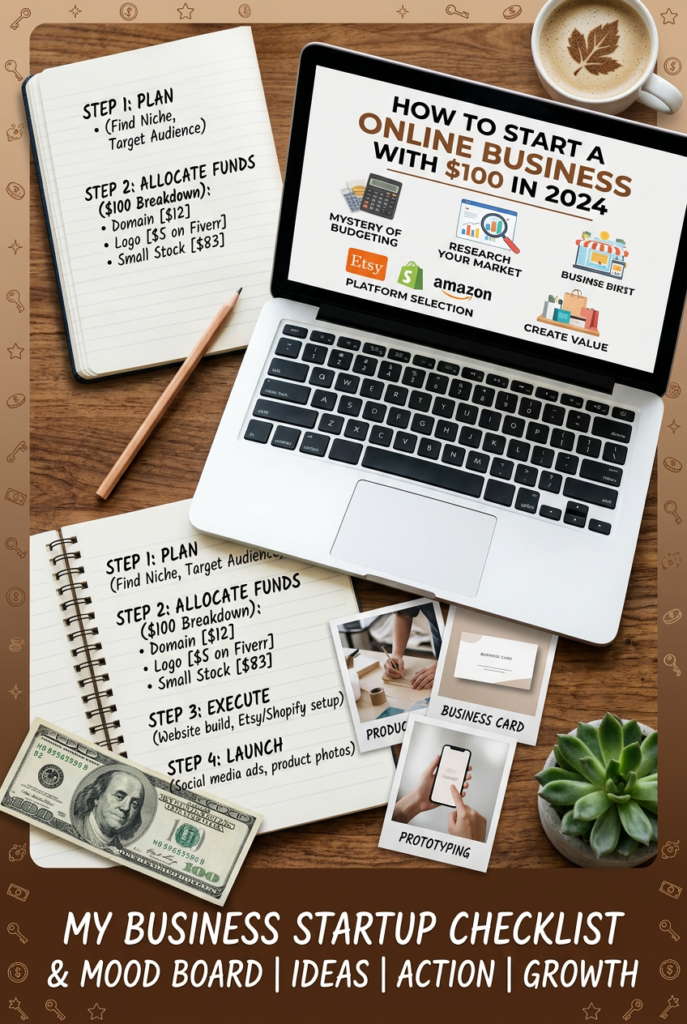
The $100 Breakdown
| Step | What You’re Paying For | Cost |
|---|---|---|
| 1 | Validation | $0 |
| 2 | Domain + social handles | 10−20 |
| 3 | Logo design | 15−50 |
| 4 | Website or landing page | 0−30 |
| 5 | Content creation | $0 |
| 6 | Branding materials | 10−30 |
| Total | 35−130 |
What Comes Next?
Once you’ve validated your idea and built your foundation, reinvest your first profits into the areas that matter most:
- More professional design as your brand grows
- Paid ads once you know your message converts
- Automation tools to save time as orders increase
- Specialized help for tasks outside your expertise
The beautiful thing about starting lean is that every dollar you earn goes directly back into growth — not into paying off startup debt.
Starting a business doesn’t require a trust fund or a business degree. It requires action.
You have the roadmap. Now go build something.
Ready to get started? Browse affordable, top-rated freelancers who can help you with logo design, website setup, business consulting, and branding — all within budget.
About The Author